Joss closes her glamping business when she wants a holiday. The cleaning checklist lives in her head, so there’s nobody she can hand the property to. That’s a revenue ceiling, and nobody was building for it.
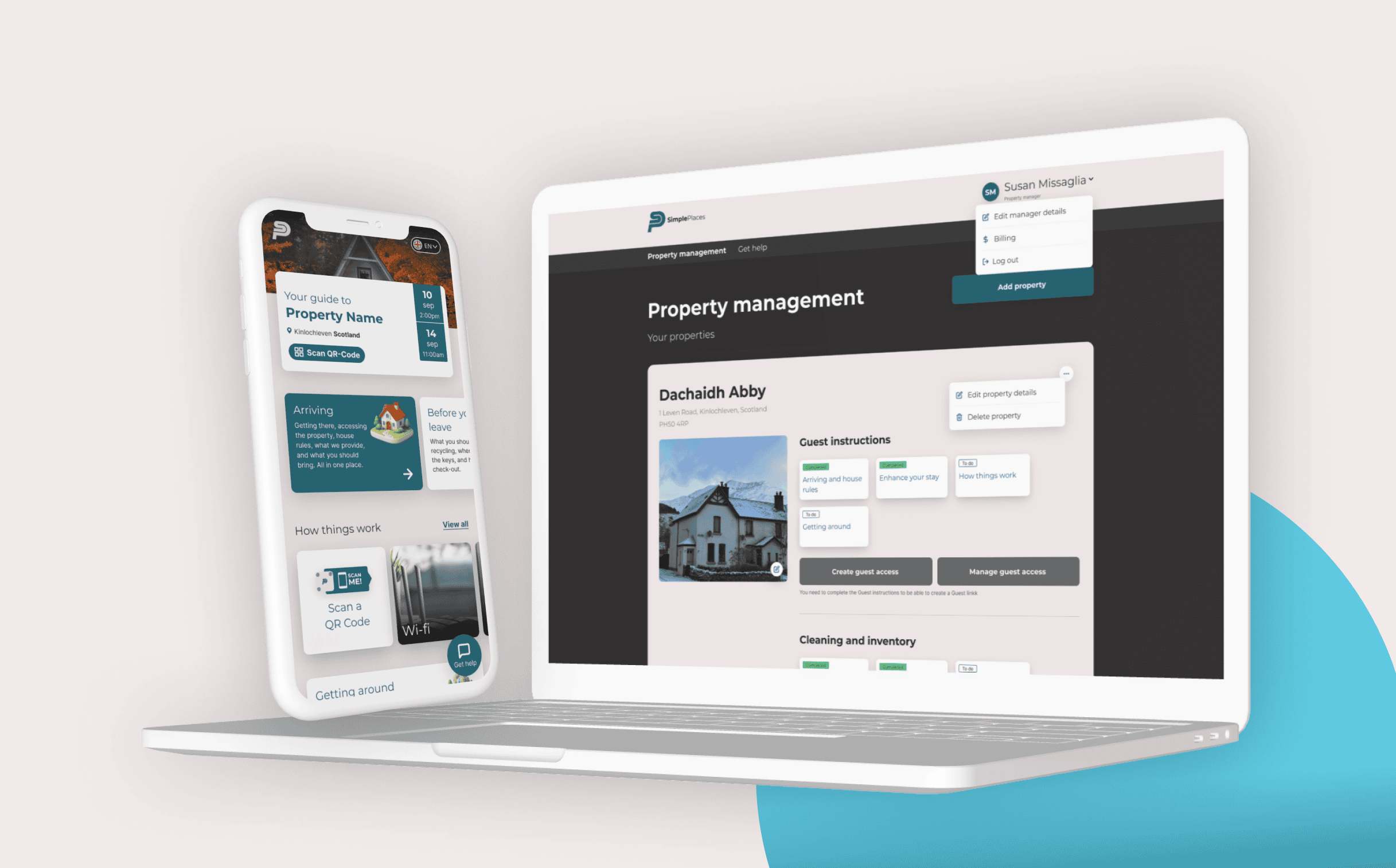
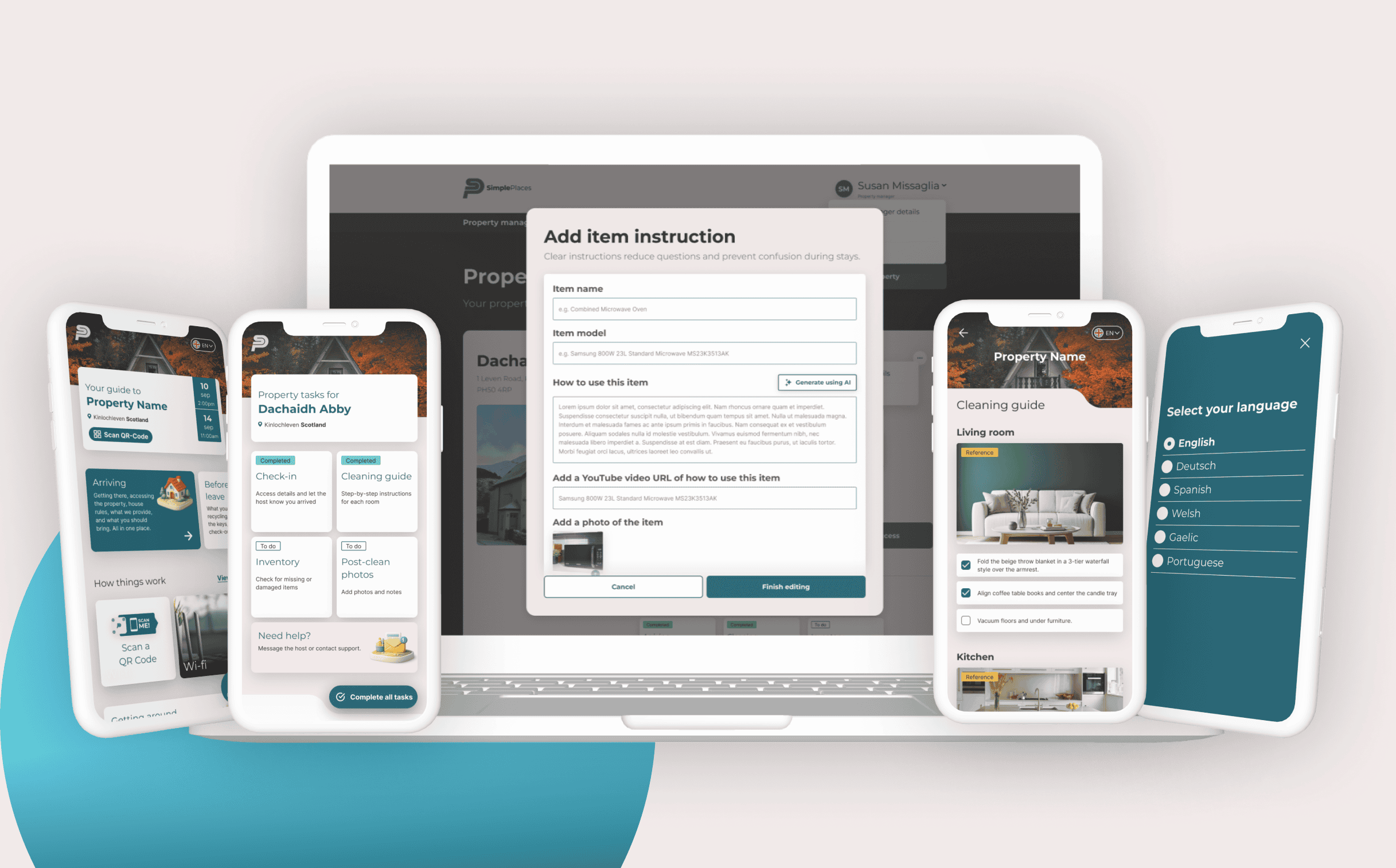
Simple Places is the operating system for short-term lets, B&Bs and small hotels. It runs the whole changeover loop and holds the record of it.
Founder, CEO and product lead. I ran discovery, product, design and the commercial side. Susan Missaglia, my wife, is tech lead and has built and runs the entire technical side.
In action
What Simple Places is, in a minute
Loading the film
Simple Places, the product film
Key successes
Five results
0→1Built the product with SusanDiscovery, product, design and the commercial side
100+Researched 100+ host threadsPlus five in-depth interviews, before building anything
3Three findings shaped the businessIncluding the price, set against operational pain rather than convenience
<10Setup in under ten minutesContent generated from a photo or a pasted listing URL
6Live in six propertiesSince 7 September 2026, launched on Product Hunt
Booking tools cover the calendar and stop at the door. Guidebook apps cover the first stage and stop there. Neither speaks to the cleaner, neither keeps a record.
User problem
The property runs on one person’s memory, so the host can’t step away.
The ceiling
It all sits with one person
The same six questions every week, the briefing before every changeover, and no way to know the place is ready without going there.
The information a guest needs almost always exists. It’s just buried, in a PDF, in a listing nobody reads, or in the host’s head. So the host repeats themselves at the worst moments.
Fine for one property. A hard ceiling the moment you want a second.
The gap
The layer nobody built
So the layer the property actually runs on is empty.
A page for your guests isn’t a system. A guidebook is a page.
The discovery
Business problem
I needed to know where the willingness to pay actually sat before building anything, and every competitor’s answer was the guest-facing guide.
User problem
Hosts had been sold static tools for years and couldn’t tell whether any of them were worth paying for.
The research
100+ threads, five interviews
We went through more than 100 threads where hosts talk online, then I ran five in-depth interviews with UK hosts across Airbnb, B&B and glamping.
Three findings shaped the business.
01The willingness to pay sat in the operational painCleaning, maintenance, the workflows that let hosts step away
02Incumbents had trained hosts to expect tools that don’t workStatic guides, never updated, no feedback loop
03Guest contact wasn’t the problemBeing interrupted over nothing was
Finding 01
Priced against pain
The cleaning checklist, it’s all in my head, so when we want to go on holidays, we close the glamping.
Joss, glamping host
Closing the business to take a holiday is the clearest revenue ceiling I could find. So I priced against operational pain rather than convenience, at £29.99 per property per month, the number hosts reached for unprompted rather than anything taken off a competitor.
Same reason cleaning, maintenance and inventory sit inside the core product instead of as add-ons.
Finding 02
Trained to expect less
The incumbents had trained hosts to expect tools that don’t work. Existing guides are static, never updated, with no feedback loop.
So a page wasn’t going to win them over. It had to be a system that stays current.
Finding 03
Available, not interrupted
I wish guests only contact me when something goes wrong, not to ask me for ice at 1am.
Becky, holiday let owner
I assumed hosts wanted to shut guests out. They didn’t. They wanted to stay available for the things that matter. SimpleBot answers from the property’s own guides. What needs a person reaches the host.
The point was never automation. It was the host not being interrupted over nothing.
Building it with Susan
Business problem
Any feature we ship can be copied next quarter by a competitor with twenty engineers and a funding round behind them.
User problem
Hosts won’t sit through a demo call or a setup that eats an afternoon.
The team
Two people against funded teams
Susan Missaglia, my wife, is tech lead. She built and runs the entire technical side. I run discovery, product and design.
Two people shipping against funded teams only works if you pick the right thing to build and then build it faster than they can react.
The call
Build the record, not the feature
The right thing was the layer the property runs on. Features get copied. The record a property accumulates over a year of its own changeovers can’t be, because it isn’t a feature, it’s an accumulation.
A guidebook company with twenty engineers can ship photo checklists next quarter. It can’t ship the record.
The speed
What I built with AI
With two of us, AI had to do real work. I used it to build the whole email lifecycle and the regression testing myself.
Susan owns the technical side of the product. Those two are mine, and they’re a big part of how two people keep up.
What shipped
The changeover loop, end to end
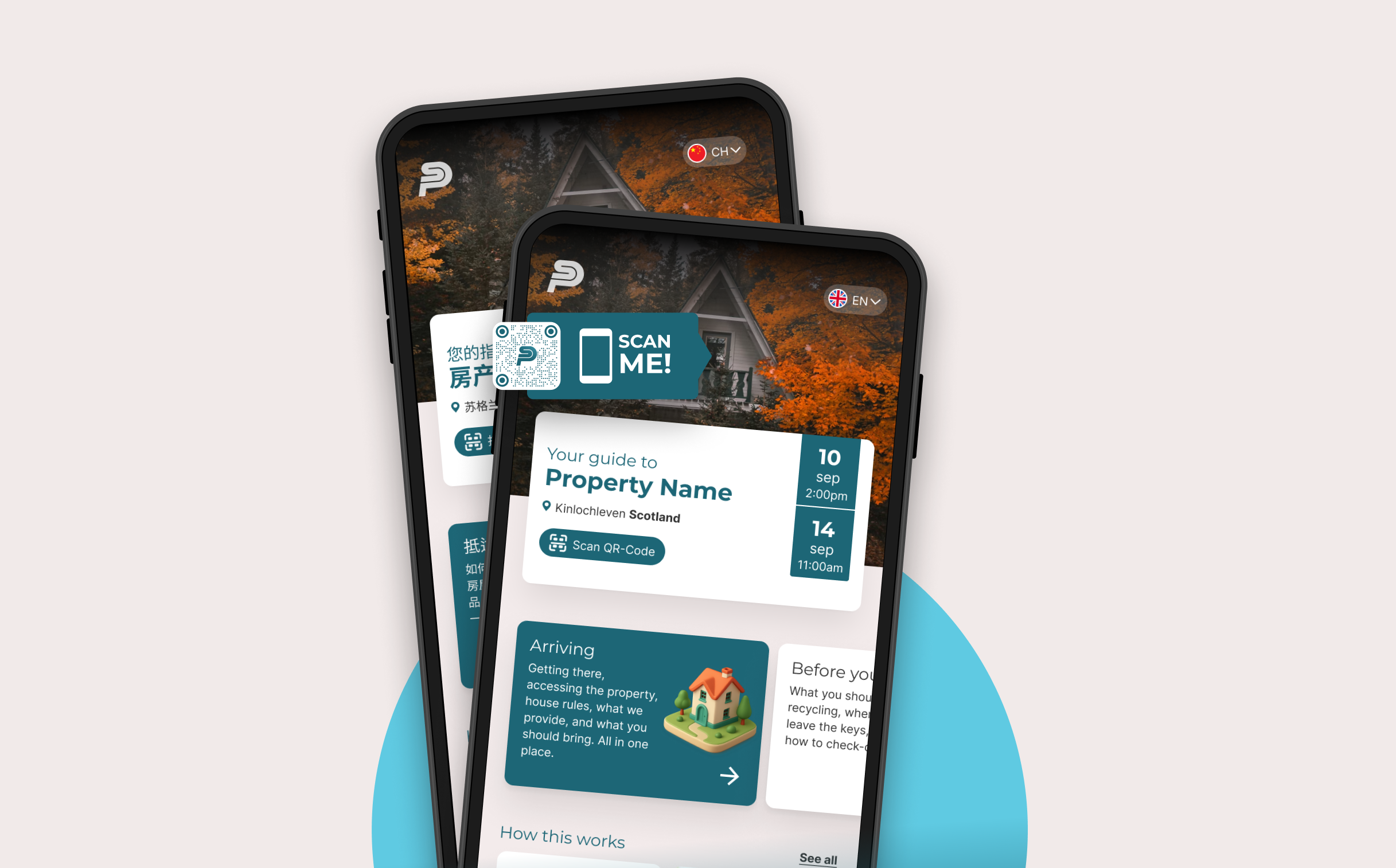
01Before arrivalOne link with check-in, the door code and the appliances, in the guest’s language
02During the staySimpleBot answers from the property’s own guides and escalates to the host when it needs a person
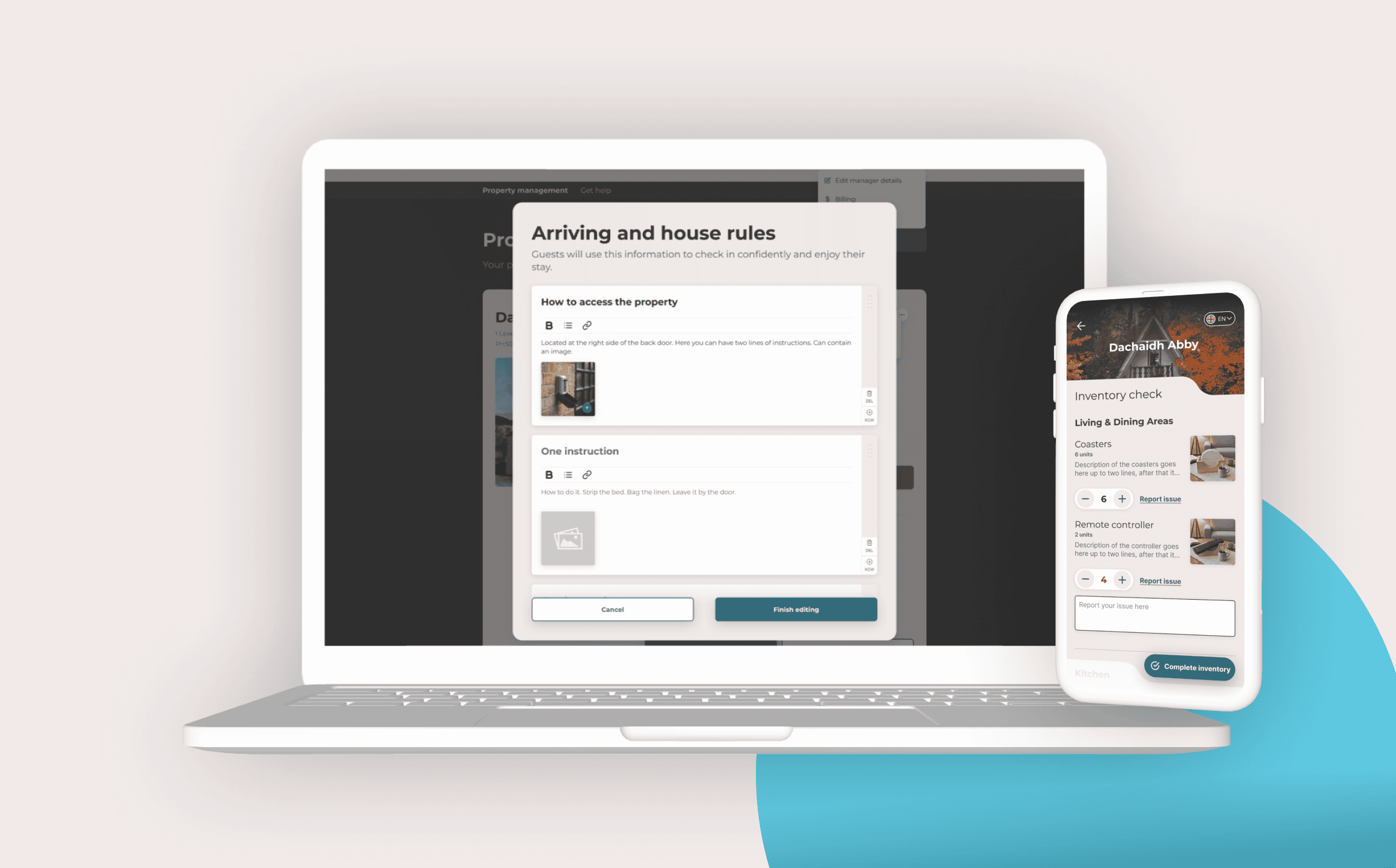
03The cleanThe cleaner works to a reference photo per room, with the instruction attached
04Sign-offPhotos of every room filed against the property, stock flagged by usage rate rather than a count
05Next guestAnd nobody did anything
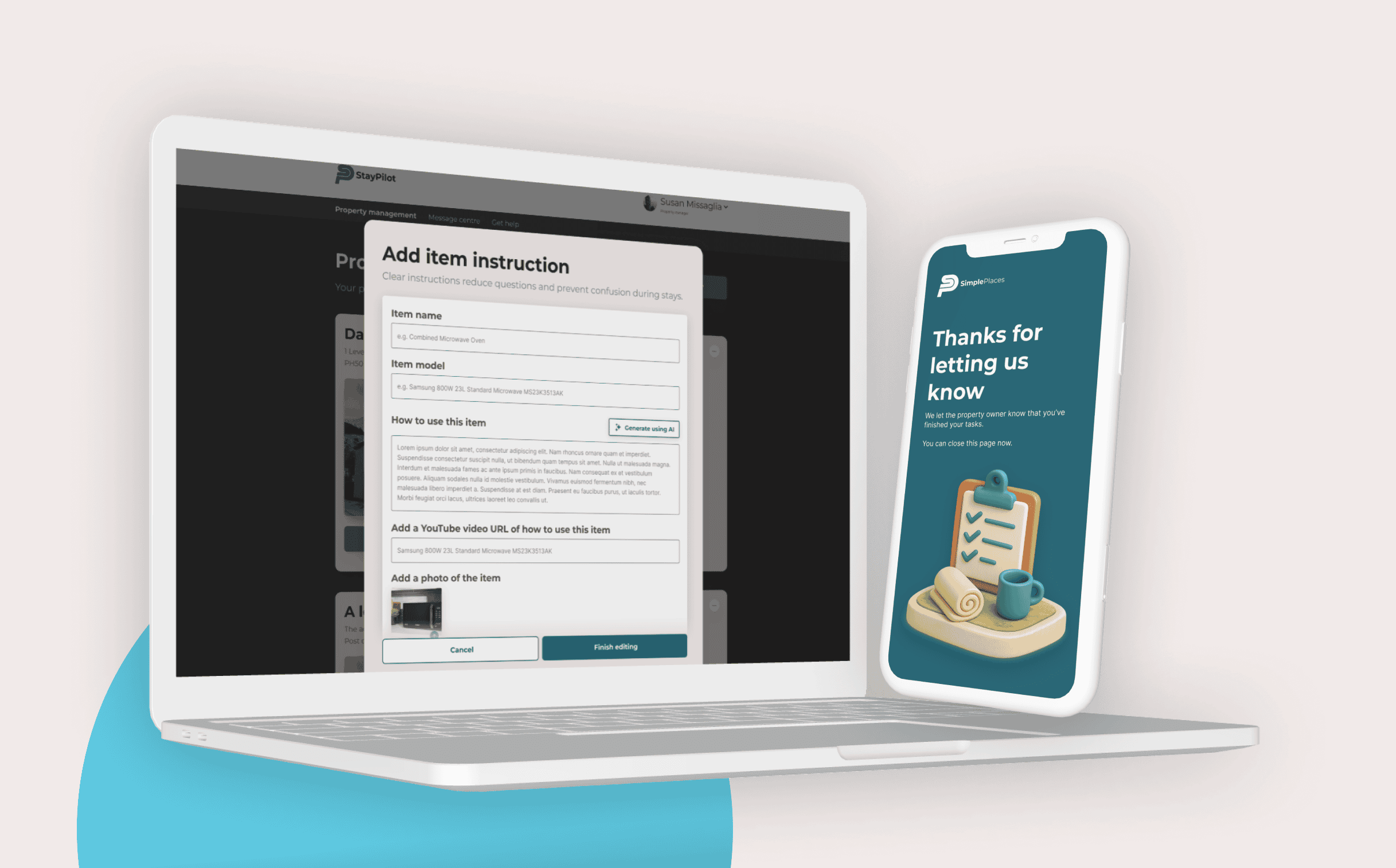
Setup runs under ten minutes with no demo call. Property and appliance content is generated from a photo the host takes or a pasted listing URL. Languages include Gaelic and Welsh alongside Mandarin and Brazilian Portuguese.
Features sit on top of a layer. The layer is the part that’s new.
Where it is now
Live since 7 September 2026, running in six properties. Launched on Product Hunt the same month.
Design partners
They don’t pay, they shape it
Our own place in Lochaber plus five design partners, the same hosts I interviewed during discovery. Every one of them asked to go first once they saw what I was building.
That’s validation I trust more than a survey.
Pricing
Where the conversations pointed
£14.99Founder price, first 30 properties
£29.99Standard, per property per month
14Day trial, card required
Founder pricing holds for as long as the subscription runs without a break. Nothing is taken until the trial ends.
The market
Own the layer inside the property
300k+UK listings
~£900kARR at 1% of them
$115B+Global short-term rental market
Own the operational layer inside the property and you own the relationship the booking platforms never reach.
The company is registered and trading, infrastructure is running, and development has been self-funded to date. What comes next is decided by what the properties using it report back.